GREENCAP CIVIC INTELLIGENCE
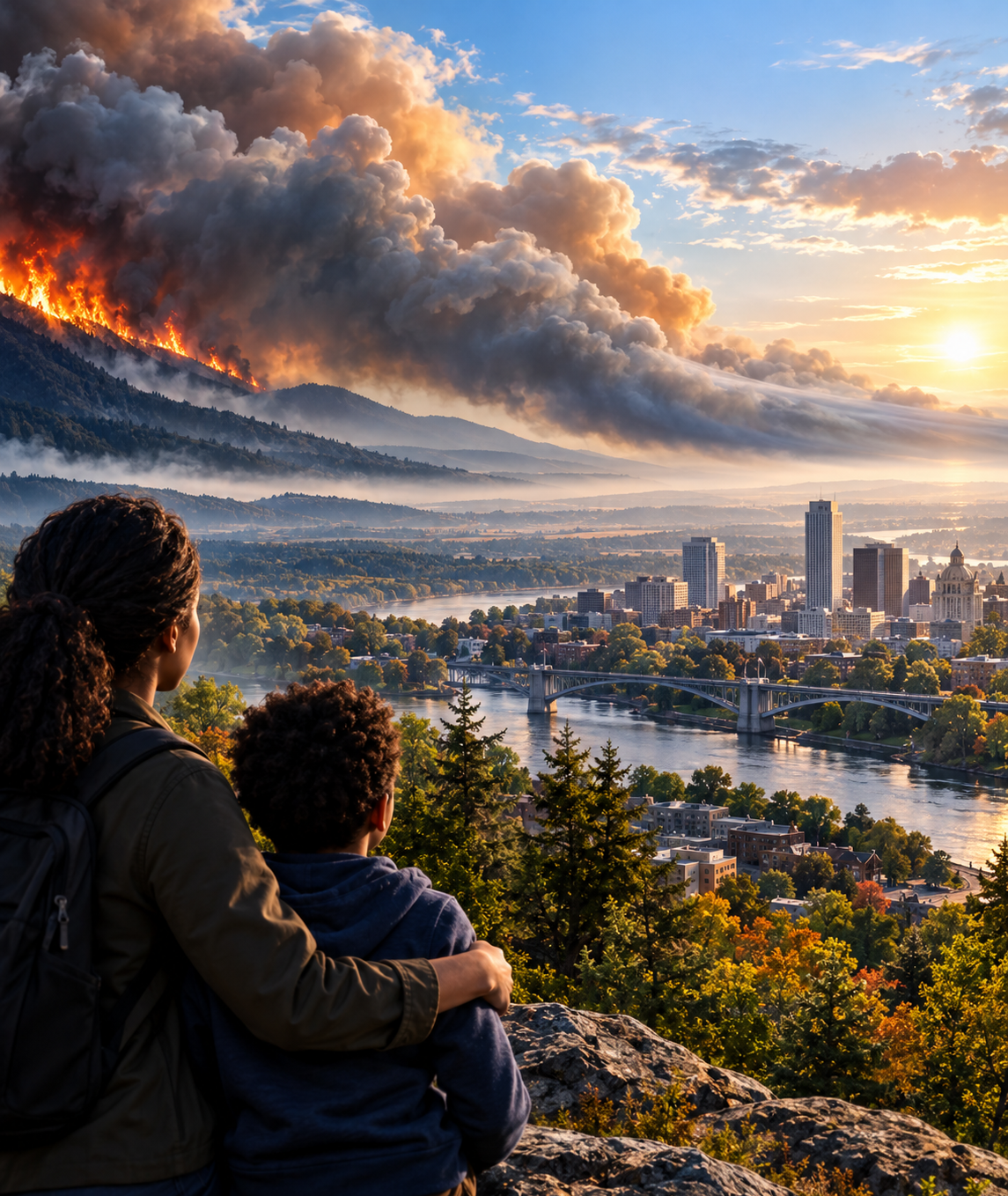
Climate hazards can affect communities even if the danger does not reach them directly. Wildfire smoke can travel across regions and borders, extreme heat can happen alongside poor air quality, and fine particles can reach deep into the lungs. The World Meteorological Organization recently confirmed that air quality and climate are closely linked. As a result, resilience is no longer just about where hazards occur, but also about where their effects might spread and who needs protection when they do.Green-cap
THIS WEEK'S CLIMATE & HEALTH INTELLIGENCE
Intelligence No. 1 | Wildfire Smoke Turns Climate Risk Into Health Risk
The Signal
The World Meteorological Organization’s sixth Air Quality and Climate Bulletin highlights the strong connection between climate and air quality. It warns that pollution from wildfires and heatwaves can undo progress in improving air quality and protecting people and ecosystems.
Wildfire smoke matters because its effects reach far beyond the fire itself. The World Health Organization says wildfire smoke can travel across regions and countries, causing sudden drops in air quality and serious health problems.
Why It Matters
PM2.5 consists of very small particles that can reach deep into the lungs and are linked to breathing and heart problems. This means a wildfire can become a public health issue far beyond the area where the fire is burning. (Wildfires and Health, 2026)
GreenCap Insight
A community can feel the effects of a wildfire even if the fire never reaches it.
Intelligence No. 2 | Climate and air quality cannot be treated separately
The Signal
The latest WMO bulletin emphasizes the close link between air quality and climate. It also points out the need for better data on fine particles, ground-level ozone, black carbon, microplastics, and other aerosols.
Heat makes things worse. When it is hot and dry, wildfires are more likely, and smoke can make air quality much worse than the fire itself. (Climate Change and Wildfires: Impacts on Air Quality and Human Health, 2026)
Why It Matters
Health risks from climate events rarely happen alone. Heat, drought, wildfires, smoke, and air pollution all interact across different areas and issues. If we treat these problems separately, we might miss important connections. (Wildfires, 2024)
GreenCap Insight
The main question is not just which hazard to prepare for, but also which systems, places, and people might be affected by its impact.
Intelligence No. 3 | Air-Quality Information Is Becoming Public-Health Infrastructure
The Signal
The U.S. Environmental Protection Agency and the U.S. Forest Service’s AirNow Fire and Smoke Map show how environmental monitoring can give useful public health information. The map brings together real-time PM2.5 data, wildfire locations, satellite images of smoke, smoke forecasts, and health advice.
The EPA states that the map includes continuous PM2.5 data from over 1,700 state, local, and Tribal air quality monitoring stations and is enhanced during smoke events with temporary monitors and extra sensors. (AirNow: Air Quality Index (AQI), 2026)
Why It Matters
Environmental information is most helpful when it guides decisions, like whether to limit outdoor activities, check how close smoke is, watch for changes in local conditions, or choose the right ways to protect people.
GreenCap Insight
Monitoring tells us what is happening. Civic intelligence helps us decide what to do about it.
SCIENTIFIC & POLICY OUTLOOK
From Separate Hazards to Connected Systems
The WMO says air-quality and climate policies need to work together because they cannot be handled separately. This calls for a more complete approach to climate resilience, where meteorological agencies, environmental groups, health systems, emergency managers, and local governments share information quickly so action can be taken before people are harmed. (WMO bulletin shows air quality and climate interlinkages, 2026)
COMMUNITY RESILIENCE SPOTLIGHT
Becoming a Smoke-Ready Community
Being ready for wildfires is not just about fighting fires. It also means getting ready for smoke. The EPA’s 2026 guide, Wildfire Smoke: A Guide for Public Health Officials, helps state, Tribal, and local leaders prepare for smoke, share health risks, and protect people. The key message is clear: do not wait for the smoke to arrive before planning how to respond. (Agency et al., 2026)
GREENCAP PERSPECTIVE
Resilience Must Follow the Consequences
Traditional disaster planning often looks at where hazards happen. But climate and health effects do not follow these boundaries. Smoke can move across counties, states, and even countries. People can be affected by air pollution even if they never see the event that caused it.
This means that communities must accept the consequences by linking environmental monitoring with health information, forecasting, public communication, and local decision-making. (Agency, 2026)
A sensor cannot stop a wildfire. A forecast cannot remove smoke from the air. A map cannot keep people from being exposed. But each of these tools can help people and organizations make better choices before anyone is harmed.
That is where information becomes civic intelligence.
KEY TAKEAWAYS
The WMO’s September 7 evaluation highlights the close link between climate and air quality. It also stresses the need for better atmospheric monitoring and more coordinated policies.
• Wildfire smoke can travel across many regions and even cross national borders, so people far from the fires can still be affected.
• Fine particles can affect both the lungs and the heart, making them a major health concern during smoke events.
• The AirNow Fire and Smoke Map combines monitoring data, fire information, smoke observations, and health advice to help guide public decisions.
• Today, climate resilience means protecting communities not just where hazards happen, but also where their effects are felt.
LOOKING AHEAD
As heat, wildfires, smoke, air quality, and health become more connected, it is clear that we cannot build climate resilience by treating each hazard on its own. GreenCap will keep exploring tools and choices that help communities move from just watching risks to anticipating what might happen, because the most important thing is having good information in time to keep people safe.
REFERENCES
WMO. (2026, September 7). WMO Air Quality and Climate Bulletin No. 6 - September 2026. Available at https://wmo.int/resources/publication-series/wmo-air-quality-and-climate-bulletin/wmo-air-quality-and-climate-bulletin-no-6-september-2026
The World Meteorological Organization published a bulletin on September 7, 2026, that demonstrates the interlinkages between air quality and climate. https://wmo.int/media/news/wmo-bulletin-shows-air-quality-and-climate-interlinkages
World Health Organization, 31 July 2026. Wildfires and health. Available at https://www.who.int/news-room/fact-sheets/detail/wildfires-and-health
The U.S. Environmental Protection Agency, June 2026. Wildfire Smoke: A Guide for Public Health Officials. Available at https://www.epa.gov/wildfires/wildfire-smoke-guide-public-health-officials
From the U.S. Environmental Protection Agency: How to Find Air Quality Smoke Reports – The Fire and Smoke Map. https://www.epa.gov/wildfire-smoke-course/where-find-air-quality-smoke-reports-fire-and-smoke-map
EDITORIAL STATEMENT
GreenCap believes that better information leads to better communities.
The GreenCap Climate & Health Brief translates emerging climate, environmental, and public-health information into accessible civic intelligence for communities, professionals, and decision-makers.
GreenCap Civic Intelligence Institute
Independent. Nonpartisan. Public-interest-driven.
Clear enough for everyone. Credible enough for professionals. Actionable for decision-makers.